The Tallest Hill Of Athens: Lycabettus
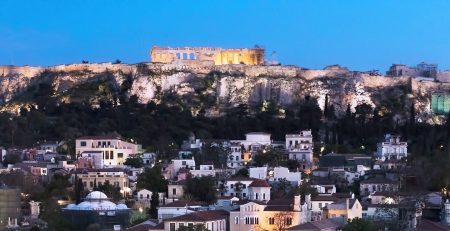
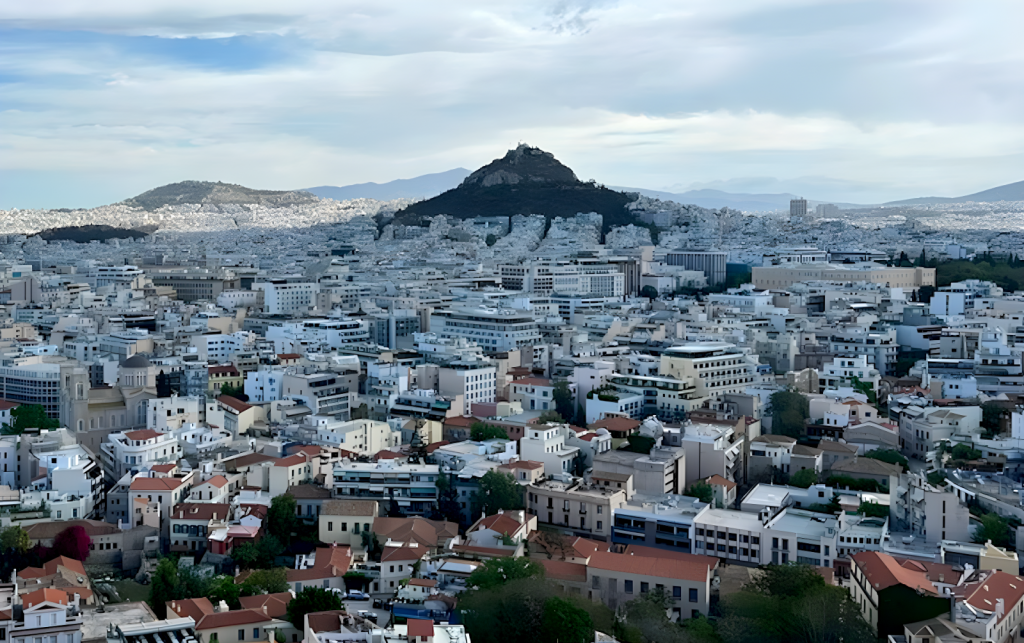
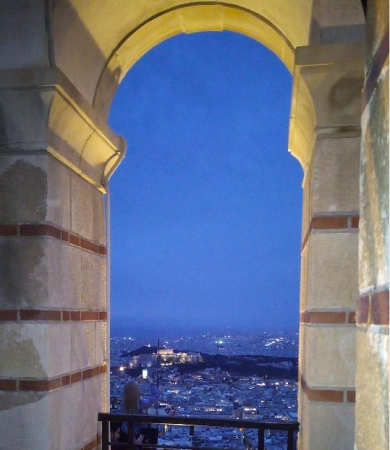
Standing 277 meters above sea level, Lycabettus Hill is the highest point in Athens, offering a panoramic view that stretches from the mountains of Attica to the Aegean Sea. Its history is a blend of ancient mythology, geological shifts, and modern transformation. Myth and Geology According to Greek mythology, the hill was a “happy accident.” […]
Standing 277 meters above sea level, Lycabettus Hill is the highest point in Athens, offering a panoramic view that stretches from the mountains of Attica to the Aegean Sea. Its history is a blend of ancient mythology, geological shifts, and modern transformation.
Myth and Geology
According to Greek mythology, the hill was a “happy accident.” The goddess Athena was carrying a massive limestone rock from Mount Pentelicus to the Acropolis to serve as a fortification. While en route, she was startled by a black crow bringing bad news; in her shock, she dropped the rock, creating Lycabettus. Geologically, it is part of the Athenian Schist and limestone formations, distinct from the surrounding plains. Its name is often linked to the word lykos (wolf), suggesting it was once a refuge for wolves that roamed the outskirts of the ancient city.
From Bare Rock to Landmark
During the classical era, the hill remained largely outside the city’s main fortifications. Unlike the Acropolis, it wasn’t crowned with grand temples, though it was likely used as a lookout point. Over centuries of Ottoman rule, the hill was heavily deforested, becoming a barren, rocky peak.
The hill’s modern identity began to take shape in the 19th century.
Reforestation: Massive efforts were made to plant pine trees, turning the grey rock into the green “lung” of Athens we see today.
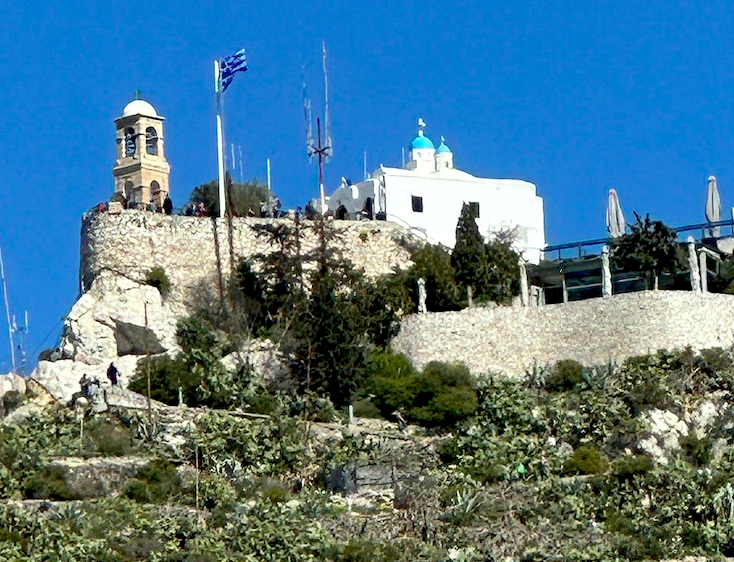
The Chapel: In the 1830s, the Chapel of St. George was built atop the summit, replacing a small Byzantine structure.
The Funicular: In 1965, an underground cable railway was installed, making the summit accessible to everyone.
You can get to the top of the hill by hiking or using the funicular. The train that goes up the mountain is quite fast. It will take three minutes to reach the top. But then you’ll miss the great views of Athens. Why don’t you go hiking up there? It will take you about 20 minutes to reach the top on foot. If you’re up for it, feel free to join George’s hike.
Modern Significance
Today, Lycabettus is a cultural hub. Its open-air theater, designed by Takis Zenetos, has hosted legendary performers from Ray Charles to Leonard Cohen. It remains an enduring symbol of Athens—a place where myth meets the modern skyline.